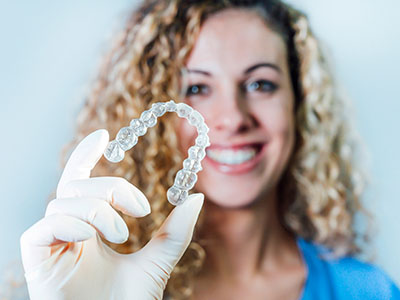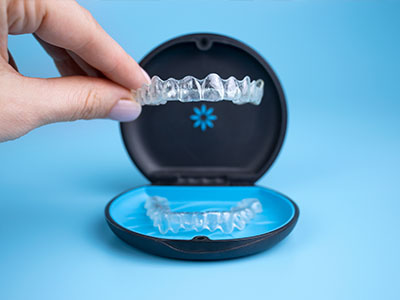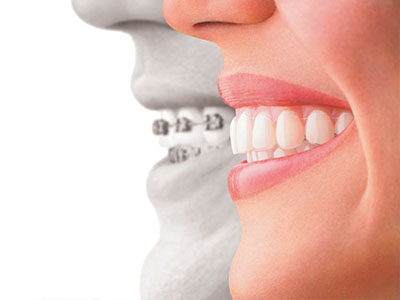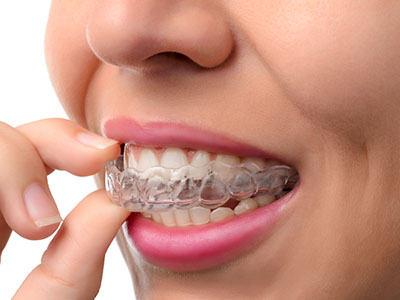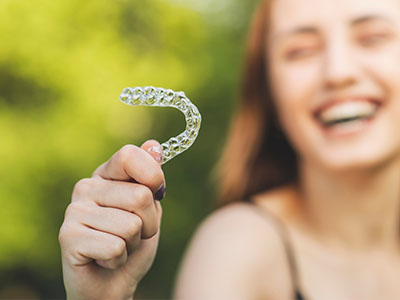

There are many options for patients who want to avoid metal braces! The most popular alternative orthodontic treatment is Invisalign®, which are clear plastic aligners designed to straighten teeth. After an examination of your teeth, your dentist will determine which option is best suited to your wants and needs.
According to the Invisalign® website, the cost for treatment is approximately the same as the cost for metal braces. A portion of this cost may be covered by your insurance. Please call us to set up a consultation and discuss potential payment plan options.
The first step is to schedule a consultation with your doctor, so they can devise a treatment plan that is best suited to your individual dental needs. Once approved, you will receive your first set of aligners. Your doctor will then regularly monitor the movement of your teeth and new aligners will be ordered according to the progress made in your treatment plan.
Invisalign® aligners are made of clear, flexible plastic. The company received a patent for this material – SmartTrack® – to be used exclusively for Invisalign treatment purposes. These aligners are FDA approved and nearly invisible!
Your doctor will give you an estimate regarding how long your Invisalign® treatment should take, which will depend on your specific needs. The average length of time for treatment is approximately 12-18 months. However, some patients may see results far sooner. Remember to wear your aligners exactly as instructed by your doctor to obtain the best results.
Your doctor will most likely recommend that you wear retainers following your Invisalign® treatment. This is a precaution that will prevent your teeth from shifting back to their original positioning. It is important to follow your doctor's instructions exactly to ensure long-lasting results.
You must wear your aligners for up to 22 hours daily. You may remove them for eating, drinking and regular oral hygiene.
No. Unlike braces, you may eat whatever you like as long as you remove the aligners before eating. Prior to placing the aligners back on, it is important to brush your teeth and the aligners after you eat.
Like any orthodontic treatment, there is a short adjustment period. The more you speak with the aligners on, the quicker you will adjust.
There will be some pressure and minor discomfort for a day or two after each initial insertion. This is a sign that your teeth are moving sequentially into their final position.
It is recommended that you remove your aligners prior to chewing gum as the gum will stick to the aligners.
We discourage smoking with aligners as the cigarette smoke will tend to discolor them.
Brushing them with toothpaste will keep them fresh and clean.
Regular office visits are every five to six weeks. This will ensure that your Invisalign treatment is progressing as planned.
All orthodontic patients are instructed to wear their retainers at night indefinitely. Sleeping with your retainers in at night will ensure a healthy bite and maintain the new position of your teeth.
Yes, if their teeth, including second molars, have grown in completely.
Invisalign® is a clear aligner system that straightens teeth using a series of custom-made, removable trays. Treatment begins with a detailed digital scan that creates a 3-D model of the teeth and a step-by-step plan for movement. Each aligner applies gentle, controlled force to specific teeth and is worn for a set period before progressing to the next tray.
The digital planning process lets clinicians visualize projected outcomes and make adjustments before fabrication. Because the trays are removable, patients can maintain regular oral hygiene and eat without the constraints of fixed appliances. Regular monitoring by the dental team ensures the plan is progressing as expected and allows for refinements if needed.
Adults and teens with mild to moderate alignment or bite issues are often good candidates for Invisalign® therapy. Candidates should have good overall oral health, with untreated decay or active gum disease addressed before treatment begins. For teen patients, adequate dental development and responsible compliance are important factors that the clinician will evaluate.
Complex skeletal problems and certain severe tooth rotations may require alternative or adjunctive treatment, so a clinical assessment is necessary to determine suitability. The dentist will review dental and skeletal relationships, document goals, and recommend whether aligners alone are appropriate or if combined therapy is indicated. Individualized planning ensures the chosen approach meets both functional and esthetic objectives.
Treatment typically starts with a consultation, clinical exam, and a fast digital scan of the teeth to create an accurate 3-D model. Using specialized software, the clinician maps tooth movements and produces a visual treatment plan that shows the expected progression. Once the plan is approved, a customized series of aligners is fabricated to match each stage of movement.
Patients wear each aligner for the prescribed time—usually about one to two weeks—before switching to the next in the sequence. Periodic appointments allow the dental team to monitor progress and provide subsequent aligners; adjustments or refinements may be made if movements differ from the original plan. The goal is to achieve a stable, functional result that complements facial features and occlusion.
Clean aligners daily using lukewarm water and a soft brush or the cleaning method recommended by your provider; avoid hot water that can warp plastic. Rinse aligners before reinserting them and store them in a protective case when not in use to prevent damage or contamination. Regularly inspect trays for fit and cleanliness, and report any persistent odor or discoloration to your dental team.
Maintain a consistent routine of brushing twice daily and flossing once daily to support gum health and prevent decay while teeth move. Remove aligners for eating and drinking anything other than water to reduce staining and maintain hygiene. Keeping teeth and aligners clean supports comfort and helps treatment proceed without unnecessary interruption.
Follow-up visits are commonly scheduled every four to eight weeks so the clinician can assess tooth movement and address fit or attachment issues. These appointments are generally shorter than many traditional orthodontic visits because there are no wires to adjust, but they remain essential for tracking progress. During these visits, the team may deliver new aligners, evaluate oral health, and make minor corrections as needed.
The exact frequency of appointments depends on the treatment complexity and the clinician’s protocol, and remote monitoring tools may supplement in-office checks for certain cases. If aligners feel ill-fitting or if any dental concerns arise, contacting the office promptly helps prevent delays. Consistent attendance at scheduled visits contributes to predictable, efficient results.
Invisalign® can effectively address many alignment and bite concerns, including crowding, spacing, and a range of mild to moderate malocclusions. Modern aligner systems incorporate features such as attachments, precision cuts, and auxiliaries like elastics to manage more challenging movements than earlier versions could. For many patients, these enhancements expand the scope of cases that can be treated without traditional braces.
Severe skeletal discrepancies, significant jaw asymmetry, or certain complex rotations may still require alternative approaches or combined therapies such as braces with surgical treatment. The clinician evaluates each case to determine whether aligner therapy alone will meet the goals or if adjunctive procedures are needed. A comprehensive exam and treatment plan will outline the recommended path and expected outcomes.
Many patients notice a mild change in speech, such as a temporary lisp, when they first begin wearing aligners, but this typically resolves within a few days as the tongue adapts. Aligners are made from smooth, thin plastic designed for comfort, and most people acclimate quickly to wearing them during daily activities. Initial soreness or pressure when switching to a new tray is common and is a normal sign of tooth movement.
Discomfort usually subsides within a few days and can be managed with over-the-counter analgesics if needed and guidance from the dental team. If an aligner edge irritates soft tissues, the clinician can trim or adjust it to improve comfort. Prompt communication about persistent pain or fit problems helps ensure timely solutions and uninterrupted progress.
Alternatives include conventional metal braces, ceramic braces, lingual braces placed on the tongue side of teeth, and other clear aligner brands; each option has different clinical strengths and lifestyle considerations. Fixed braces may offer more precise control for certain tooth movements, while lingual braces provide an invisible option but can affect speech and hygiene differently. The choice depends on the nature of the malocclusion, patient preferences, hygiene capabilities, and the clinician’s clinical judgment.
A thorough consultation compares the expected outcomes, treatment timelines, and practical implications of each approach without relying on cost considerations. Your dental professional will explain which options are clinically appropriate and why, helping you select the solution that best aligns with functional needs and personal priorities. In many cases, the final recommendation balances effectiveness with comfort and daily life compatibility.
Retention is a critical phase that preserves the new tooth positions after active alignment, and most patients receive a retainer tailored to their needs. Retainers can be removable or fixed and are typically worn nightly or according to a schedule the clinician prescribes. Adhering to the recommended retention protocol reduces the risk of relapse and helps stabilize occlusion over time.
Periodic follow-up visits allow the dental team to monitor stability and suggest adjustments if minor settling occurs. Good oral hygiene and routine dental checkups support long-term health and the longevity of the result. The retention plan will be individualized based on the specifics of the case and long-term goals.
At Claro Dental we begin with a focused consultation that includes a clinical exam, a review of dental and medical history, and a digital scan or x-rays as needed to document the starting condition. During this visit the clinician discusses treatment goals, reviews the projected outcomes, and explains any recommended adjunctive steps to optimize results. This appointment sets clear expectations and outlines the next steps in the process.
Our office is located at 5730 66th St., Lubbock, TX 79424, and the team will explain scheduling, clinical requirements, and what to anticipate during active treatment and retention. If aligner therapy is appropriate, you will receive a personalized plan and a timeline for care. Clear communication at the outset helps ensure a smooth treatment experience and supports predictable outcomes.
Available after hours by appointment.